.svg)




R&D Spotlight:
How NAMs Are Transforming Drug Discovery
How NAMs Are Transforming Drug Discovery
SPONSORED BY

Discover how New Approach Methodologies (NAMs) are transforming drug discovery and preclinical research.
Explore human-relevant biology, organoids, micro-physiological systems and AI-enabled approaches designed to generate more predictive insights and support translational decision-making. This focused online showcase brings together industry experts to examine how NAMs, in silico approaches and human-relevant models are being integrated into modern discovery workflows.
- Advance Human-Relevant Research – Explore organoids, micro-physiological systems and other human-relevant models designed to improve translational insight
- Harness AI & In Silico Approaches – Discover how AI-enabled prediction and in silico toxicology can complement experimental approaches and inform development decisions
- Improve Translational Decisions – Gain practical insights into integrating NAMs into drug discovery and preclinical workflows to support more informed decision-making
VPs, Directors & Senior Managers from leading pharma & biotech companies and research institutions in the following fields and more:
- New Approach Methodologies
- Drug Discovery
- Preclinical Development
- Translational Research
- Toxicology
- Organoid Research
- Microphysiological Systems
- In Silico Toxicology
60-Minute Agenda
Industry Presentation
Industry Presentation
Solution Provider Presentation
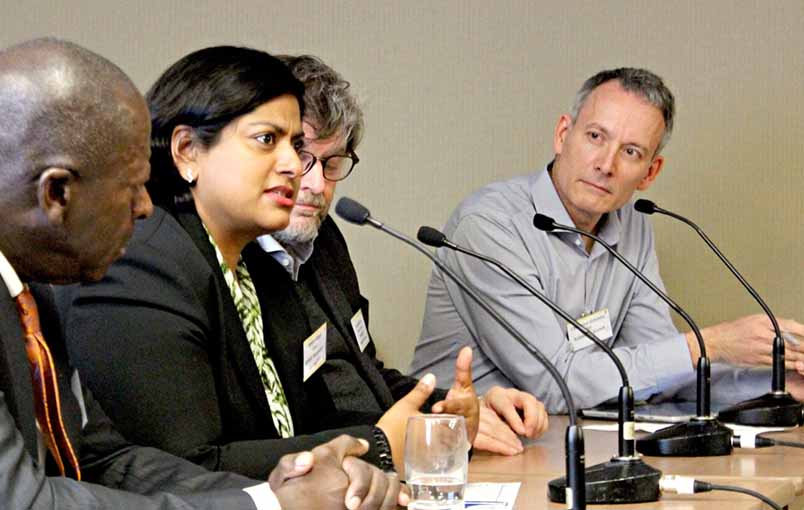
Panel Discussion
End of Technology Showcase
About 10x Genomics
10x Genomics builds technologies that turn biology into answers, giving researchers the resolution to see how diseases develop and respond to treatment.
Its Chromium Single Cell platform delivers single cell multiomics across thousands of samples and billions of cells, even from FFPE, while its spatial portfolio spans Atera In Situ, Xenium In Situ, and Visium Spatial for whole transcriptome insight at subcellular resolution.
Newer additions like Flex Apex and Atera push sample access and throughput further still, profiling FFPE and fixed whole blood and running up to 800 whole transcriptome samples per year. This work powers breakthroughs across pharma, oncology, immunology, and AI cell models, and has been cited in over 10,000 publications by scientists advancing their research worldwide.